Safest bet
The group day
Flexible, refund up to a day ahead
- Length12 hours
- Cancel24 hours ahead
- Reviews386
Checklist to tick off
Preparation · 9 items
Tap items to tick them off. This device remembers your progress.
0 / 9 ready
You are ready. Choose your date for the coast, and the rest is settled.
Book your seatThe dry and wet months as official pages give them, the storm and tide notes worth knowing, the crowded dates and what to pack for each kind of day.
Editorial team, vungtaudaytrip.quest · Updated November 16, 2026 · 7 mins to read
Key facts
Vung Tau has a tropical monsoon climate with two distinct seasons, rainy and sunny, and the authority calls the town a year-round destination.4 The provincial tourism promotion center is more specific: the rains fall from May to October and the dry months run from November to April, with an annual average temperature of 25 to 27 degrees and average humidity above 80 percent.2 It adds that there is no winter, so the coast suits a holiday at any time.2
The sources do not line up to the day, and that is useful to know when you read a forum. For Ho Chi Minh City and the Mekong Delta, the national authority lists May to November as the season of sporadic rainfall, hot and humid, and December to April as clear, hot and sunny.5 A guide for families gives the dry months as November to April and picks December and January as the most pleasant.1 The wet season starts in May by one source and ends in October or November by another.
Read that as a fuzzy edge, not a mistake. The 2026 outlook from the national forecasting centre expected the rainy season to begin in the second half of May in the southern region.6 So expect the first heavy showers in late May, expect the clearest weeks from December, and treat the weeks at either end as a gamble. If you search for the weather in Vung Tau a week before you travel, a live forecast will beat any monthly average.
Side by side
| Source | Dry period | Wet period | Notes |
|---|---|---|---|
| Provincial promotion center | November to April2 | May to October2 | Storms rare, humidity above 80 percent2 |
| National authority, city | December to April5 | May to November5 | Afternoon downpour in the wet months7 |
| National authority, family guide | November to April1 | Not stated | December and January most pleasant1 |
| National forecasting centre | Not stated | Second half of May start6 | A 2026 outlook for the south6 |
Each source gives its own dates, so the months at the edges of each season are the least reliable; a live forecast beats an average.2,5,1
The dry season is the easy answer. The family guide of the national authority says that Vung Tau experiences its best weather from November to April, and it points to December and January as the time when the beaches are breezy and most pleasant.1 For Ho Chi Minh City the same authority lists December to April as clear skies, hot and sunny, which tells you what to wear on the bus out of the city.5 Vung Tau in December sits inside that window, and the family guide names December and January as the pick of the year.1
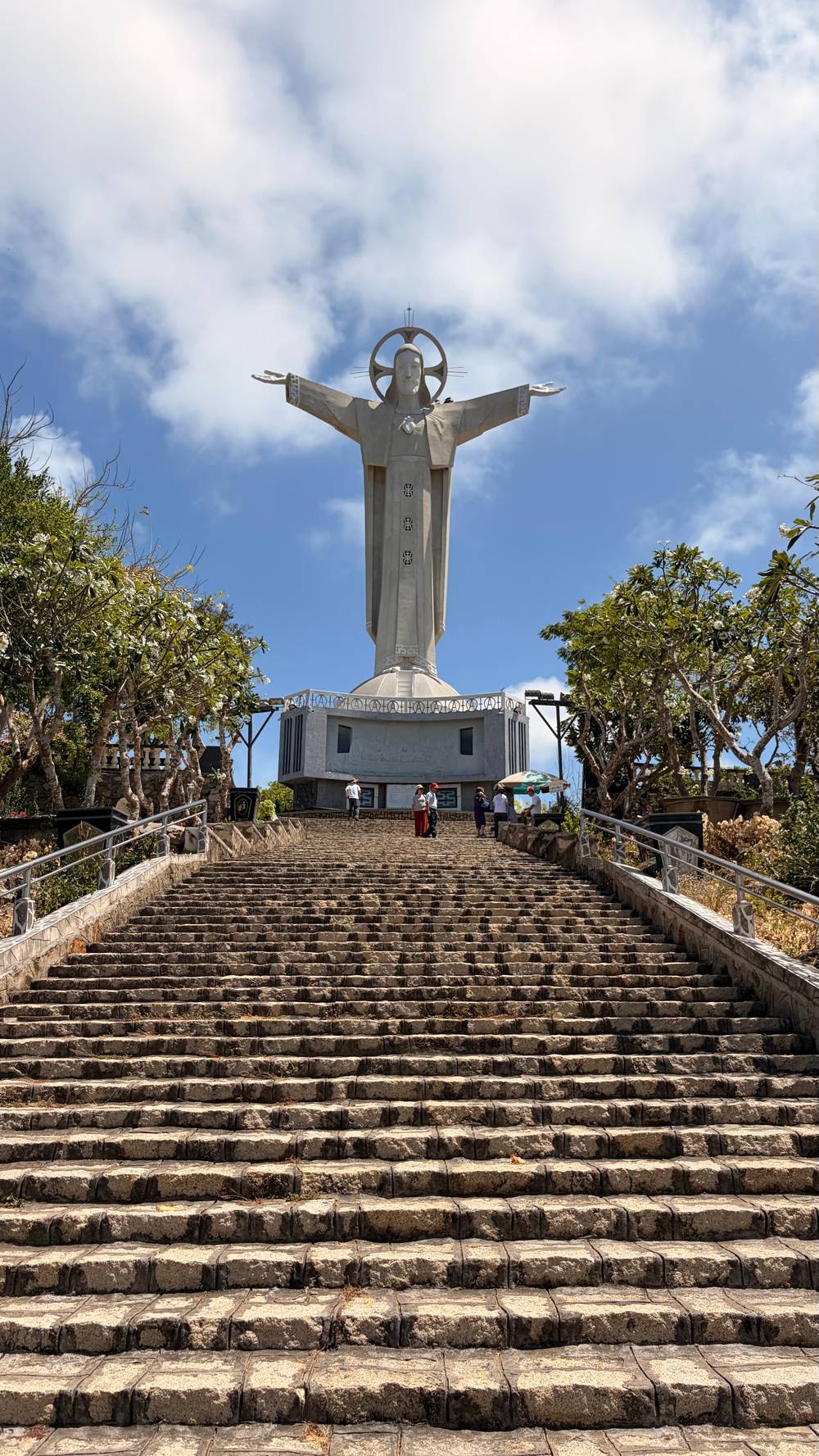
Heat is the thing to manage. Temperatures in the city are normally around 30 degrees with sunshine, and the coast is no cooler at midday.7 A hill park above the city averages 22 to 25 degrees, which shows how much the elevation matters if you want a break from the sun.8 Take the climbs, the statue steps and the lighthouse ridge early, and keep the beach and lunch for the middle of the day.
If you want one rule for planning a Vung Tau month by month, use this: pick November to April for a beach day, avoid trying to squeeze the hills into the hottest hours, and book the day tour with a morning pickup so that the walking comes before the sun is high. The group day we book leaves at 07:30 AM, which suits that logic. A dry day or two is enough for a coast outing, so look at the forecast the evening before.
Temperature figures
The rainy months are not a write-off. The provincial center quotes a single Vung Tau temperature range for the whole year.2 For the Mekong Delta region around Ho Chi Minh City the national authority describes an afternoon downpour that arrives like clockwork from May to November, usually lasting a few hours, and the days are hot and humid.5,7 The provincial tourism center says that Vung Tau rarely has storms and is often sunny, even in the rains.2 Put those two lines together and the picture is mornings of sun and a shower after lunch.
That pattern fits a day tour well. The group day puts the beach in the middle of the day and visits the White Palace and Thang Tam Temple later. If a shower arrives at the beach, a covered seafood restaurant at lunch is a natural pause. Swimming is a different matter: one listing says swimming is not on offer at its beach stop, so confirm the plan if the swim is why you are coming.
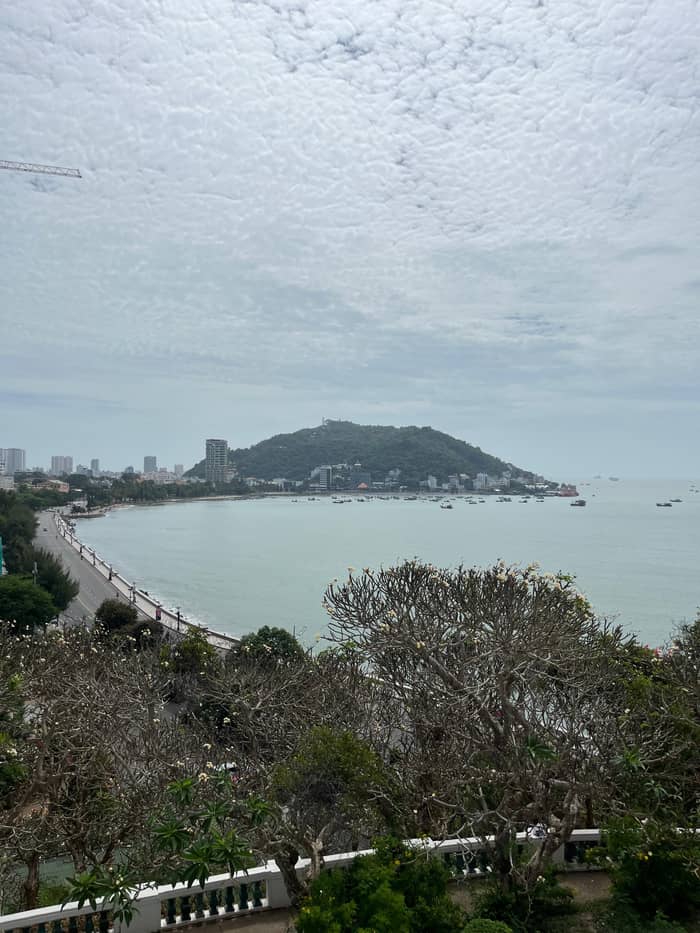
Sunset is the other casualty of a wet afternoon. Front Beach, on the west side of the peninsula, is described as the place to catch an ocean sunset, and the lighthouse ridge is another vantage point at dusk.9,10 On a cloudy evening both will be disappointing, so do not make them the only reason for a late bus back to the city. A day tour that returns around 18:00 leaves the sunset to chance.
Pick your date
Say what you want from the weather and read off the months that fit.
If I want the calmest beach days
December and January
The family guide names those months as breezy and most pleasant.1
If I want to avoid rain altogether
November to April
The provincial center puts the dry season in those months.2
If I want fewer people and no surcharge
A non-holiday weekday
Holiday dates carry a surcharge of 200,000 VND on one listing.
If I travel in the wet season
Plan mornings
The national authority describes a reliable afternoon downpour from May to November.7
If I travel when storms are expected
Book flexibly
Free cancellation up to 24 hours before covers a bad forecast.
Three ways to hedge
Safest bet
Flexible, refund up to a day ahead
Flexible
You choose the hour
Weather watch
Check the sea first
Storms are a late-year risk. A 2026 briefing by the national forecasting centre said that from September to December storms were expected to primarily affect central and southern Vietnam.3 The provincial center, by contrast, describes a coast where storms are rare, so treat the two as different scales: rare for the town, but possible in a late-year system.2
The same 2026 outlook listed high-tide events on the southeastern coast, including November 4-10 and December 4-10, when the water level at the Vung Tau station may exceed 4.3 m.11 That is a note for people who plan a walk on the low-tide path to the small island or a stroll on the seafront, not a reason to stay home. For any dated plan, check the forecast the national centre publishes.
On the water, the weather matters most for the ferry. The ferry listing cautions that rough seas or weather now and then cause delays, and it asks travelers to read the forecast. The group day tour is more forgiving, because its listing says the return depends on traffic and weather, and cancelling is free until 24 hours before the start. If the forecast turns bad, cancel the day before and rebook rather than gamble on the road.
Price your day
Type in who is travelling and see the price of each route to the coast.
Look at 3 options
Type in who is travelling and see the price of each route to the coast.
≈
View≈
View≈
ViewStarting prices from GetYourGuide, converted at the ECB reference rate. You will see the exact price when booking.
A year on the coast
Dry months
The dry season spans November to April, and December and January are the pleasant peak.1
Hottest weeks
Temperatures in the city are normally around 30 degrees with sunshine.7
Rains begin
The 2026 outlook put the southern rainy season in the second half of May.6
Wet season
May to October is the wet season, with storms rare on the coast.2
Holiday dates
Dates such as April 30, May 1 and September 1 and 2 carry holiday surcharges.
Late year
September to December storms were expected to affect central and southern Vietnam.3
Vung Tau is the beach that Saigon families drive to, so the busiest dates are the ones when the city is off work. One listing for a beach and statue day charges each guest an extra 200,000 VND on holidays around the end of April and the start of May, early September and New Year's Day. Another warns that travel time on the expressway can vary at weekends and on public holidays, and that delays are possible.
The practical rule is to go on a weekday that is not a holiday. The road is quicker, the group is smaller and the surcharge disappears. One reviewer of the day we book wrote that only 7 people shared a big bus, which shows how much the number on board can swing by date. If you can only travel at a weekend, leave early and take the longest bus time in the listing as your planning figure.
The national tourism authority also advises that there is no bad time to visit Vietnam, and it names March to May as the best weather countrywide.12 That is a national view, not a Vung Tau view, but it shows that the shoulder months before the rains are a good bet for a trip that includes other regions. For a coast day alone, the dry season from November to April remains the safe choice.1
Video
WondereLand on YouTube · Video data is requested only when you tap play.
There is no winter in Ba Ria - Vung Tau, so it is available for vacations all around the year.
Think sun first and showers second when you pack. A guided-day listing asks for sunscreen, a hat, water, insect repellent and comfortable shoes, and another asks for a swimsuit if you plan to swim. In the wet season add a thin waterproof layer and a thin jacket for the ferry, because the cabin air conditioning runs cold.
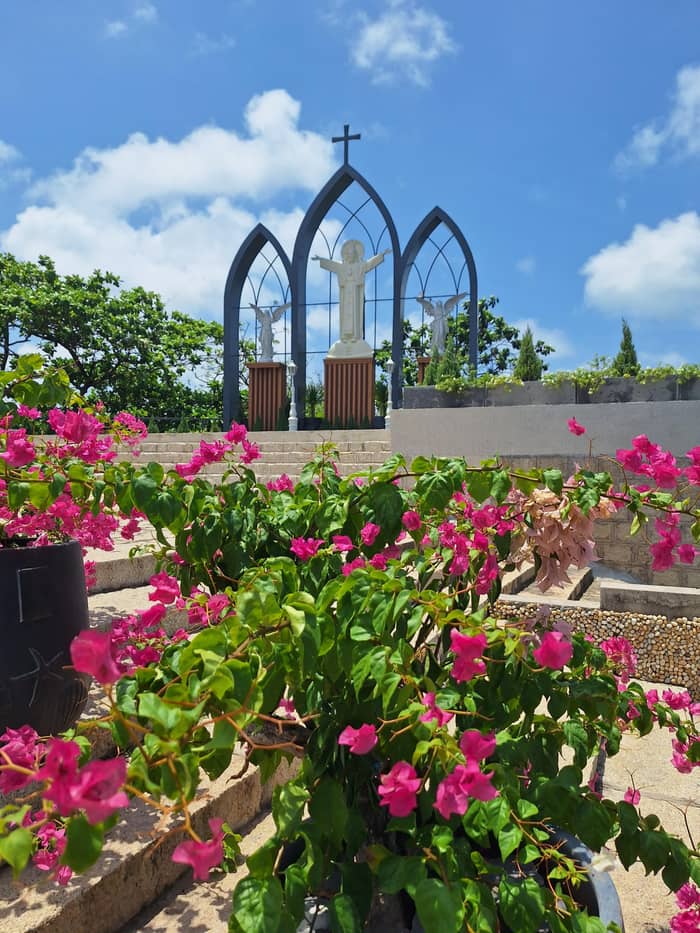
The statue and the temples set a clothing rule that has nothing to do with the weather. The Christ statue charges no entrance fee but expects the dress code of a religious site, and a listing asks for long pants or a long skirt and no sleeveless shirts.13 That is a lot of fabric on a hot day, so choose light cotton and carry a layer in your bag rather than wearing it all morning.
Last, plan the order of the day around the heat. Lunch of 75 minutes and 1.5 hours at Thuy Van Beach sit in the middle of the day we book, and the temple and the palace come after. If you build your own day, put the walking in the morning, the water in the middle and the lighthouse or Front Beach at the end, and leave a gap for the shower that sometimes arrives after lunch.
FAQ
The national tourism authority sets the dry season, and the best weather, at November to April, with December and January the most pleasant.1
The provincial center gives an annual average of 25 to 27 degrees and says there is no winter on the coast.2
A 2026 outlook expected September to December storms to affect central and southern Vietnam, so check the forecast the evening before.3
A listing warns of expressway delays on those days and adds a holiday surcharge on dates such as April 30 and May 1.
Our day's listing lets you cancel at no cost until 24 hours before the start, and pay later.
Sources
Planning a Vung Tau day from Ho Chi Minh City? Ask a real person here.