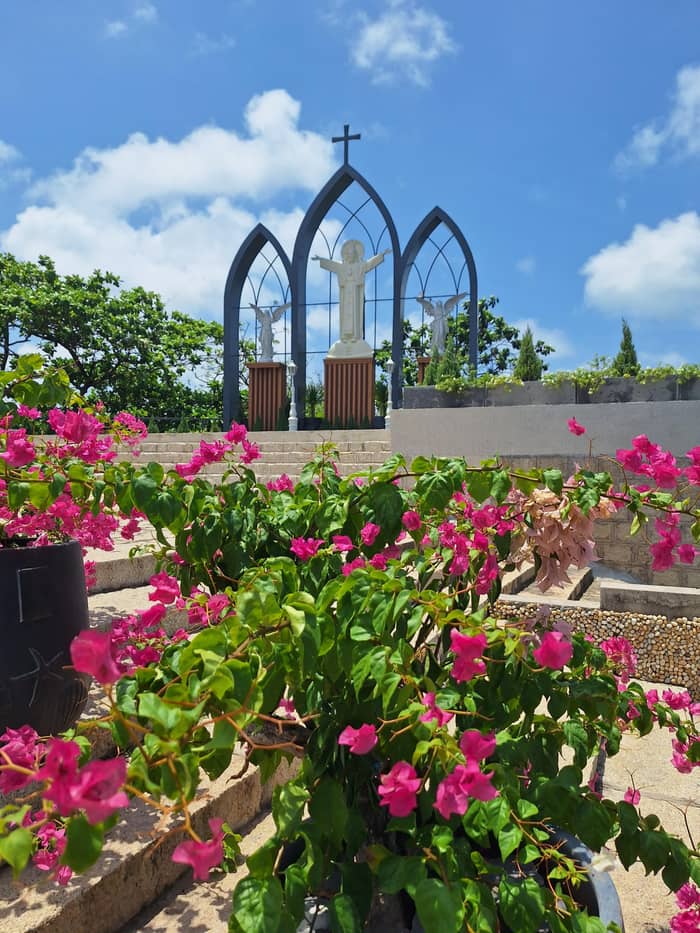
Group
Main group day
Statue, temple, palace
- Departs07:30
- BackAbout 18:00
- Reviews386
Checklist to tick off
Preparation · 9 items
Tap items to tick them off. This device remembers your progress.
0 / 9 ready
You are ready. Choose your date for the coast, and the rest is settled.
Book your seatWhat each landmark is, which official figures agree and which do not, how hard the climb to the statue is and how the sights fit into a day out from Saigon.
Editorial team, vungtaudaytrip.quest · Updated November 16, 2026 · 8 mins to read
Key facts
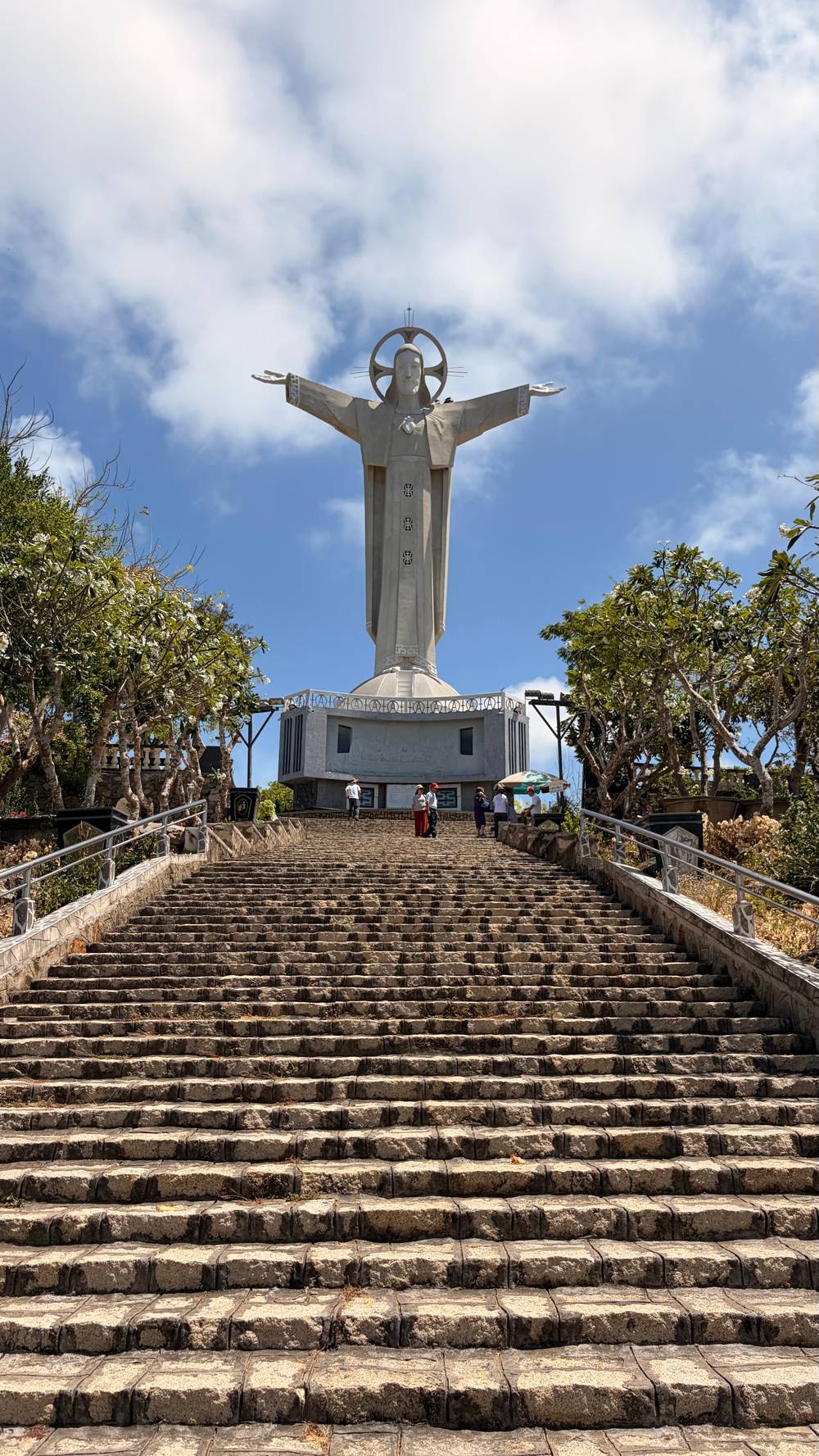
The Christ the King statue in Vung Tau is the landmark visitors photograph first, and it earns the attention. Vietnam Tourism places the 32-metre statue on a peak at the city’s southern tip, close to where Back Beach turns into Pineapple Beach.7,1 The news agency adds that it stands on Little Mountain and compares it with the 30 m statue of Christ the Redeemer in Rio de Janeiro, a comparison that makes the point about scale.8 On a clear day the arms of the figure point out to sea over a view that justifies the effort.
The effort is the climb. The authority’s sightseeing page counts 800 steps of staircase to the base and a further 133 to reach the highest platform.1 Its essential guide gives about 800 steps up the headland and another 100 to the shoulders, a smaller figure for the final stretch.9 Either way the lower climb is steady and long, and the authority suggests that visitors who prefer not to walk can go up on the back of a motorbike taxi.10 Start early, carry water and take the steps slowly.
The statue also has a human story. The news agency says work began in 1974, was interrupted for a while and ended in 1994, when the site officially welcomed visitors.11 The news agency says it belongs to the Ba Ria Diocese.11 The authority says entrance is free and the standard dress code for religious sites applies.6 A day-trip listing in our records asks guests to cover their legs and to avoid sleeveless tops. Dress for a church and you will not be turned back.
Where official pages differ
| Subject | One source says | Another says |
|---|---|---|
| Statue steps | About 800, plus 100 more9 | 800 plus 1331 |
| Statue date | Built in 19749 | Begun 1974, finished 199411 |
| Lighthouse age | Erected in 18622 | Early twentieth century3 |
| Lighthouse reach | 30 nautical miles13 | 35 miles15 |
| Inside the statue | Under maintenance | Climb inside offered |
We give each figure with its source and do not pick one; confirm anything that matters to your plans on the day.9,11
Several of the figures above do not match from one official page to the next, and a fair guide shows them side by side. The statue’s construction is a case: the essential guide says it was built in 1974, while the news agency says it was begun in 1974 and completed in 1994.9,11 The dates can be reconciled, since a building can start in one year and finish in another, but a reader who sees only one page will come away with a different date.
The listings add their own versions. One listing says the visit includes the opportunity to climb inside the statue, about 1000 steps up and 1000 steps down, with a dress rule attached. Another says the statue is under maintenance and that visitors cannot go inside, and it counts around 800 steps to the top of the hill. Both cannot describe the same access on the same day, which is a good reason to ask your operator what the current situation is before you climb.
Our rule on this site is to give each figure with its source and not to choose one. When you read a step count, remember that it may include or exclude the platform stairs and that tour operators round their numbers. For the lighthouse the disagreement is larger still, as the next section shows. If a figure matters to you, such as the opening hours or an entry price, ask the operator or look at the official page of the site on the day, because such facts change.
The Vung Tau lighthouse sits on Little Mountain, not far from the statue, which makes the pair an easy combination. Vietnam Tourism describes a winding road up the hill and says the view all the way round suits the hour of sunset.2 A second article from the authority describes an evening visit at which the city glittered under a blanket of lights.16 That evening picture is rarely part of a day trip, which returns to Ho Chi Minh City, so it belongs to visitors who stay the night.
Its age is the part that sources do not agree on. One page says the French erected the lighthouse in 1862 and calls it the oldest in Vietnam.2 The news agency calls it 18 m high, with a light that reaches 30 nautical miles and a life of over 100 years.13 The government news portal gives the same height with a reach of 35 miles.15 Another authority page dates it to the early twentieth century and claims the oldest architecture of its kind in Vietnam and Southeast Asia.3
Which to believe is not for us to decide. If you stand at the foot of the tower the date matters less than the setting, a small lighthouse above the sea with the peninsula spread out beneath it. The figures for the reach of the light differ too, 30 nautical miles in one source and 35 miles in another, so we quote both and leave the question open.13,15 The practical lesson for a visitor is to treat a precise date as unconfirmed.
Pick your landmark
Tell us what you hope to see and we point to the landmark that matches.
If I want the big view
The statue
The authority promises a panorama from the arms of the statue.10
If I want a sunset
The lighthouse
The authority calls its 360-degree views ideal for sunset.2
If I want history and shade
The White Palace
If I want to skip a hard climb
The palace and cape
The statue needs about 800 steps, unless you take a motorbike taxi.10
If I am visiting on a Monday
Check the order
One listing says the palace is closed every Monday.
Ways to see them
Group
Statue, temple, palace
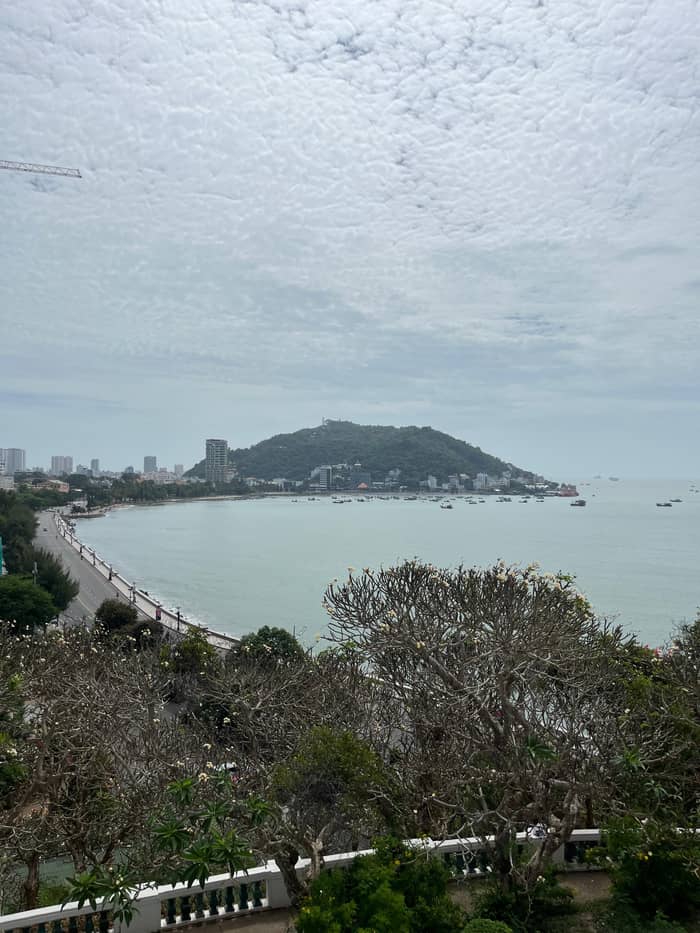
Detailed
Palace closed Mondays
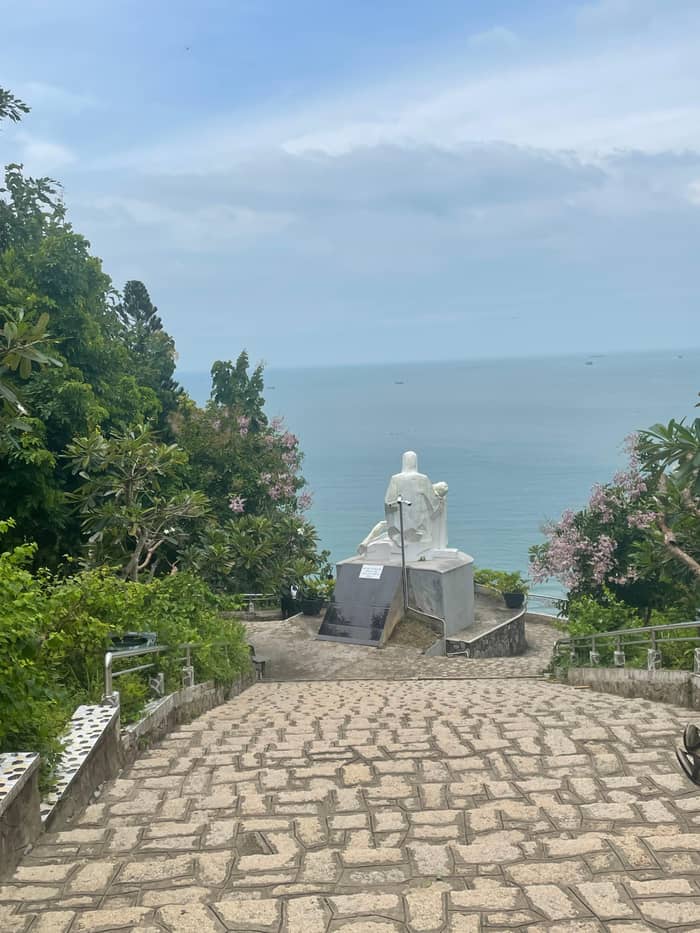
Climb
Dress rules apply
Bach Dinh in Vung Tau is the white villa on the slope above the sea, and it is the landmark that feels most like a house. Vietnam Tourism says it was built in 1898 as a summer villa in a European style, with statues, gardens and period furniture.4 The news agency places it at 4 Tran Phu Street, 50 meters above the sea, and links it to Governor General Paul Doumer.17 Its all-white walls give the name, since bach means white in Vietnamese.
The building is compact. The news agency describes a three-floor building 19 meters high and 25 meters long, with French and a little Greek influence.12 It was not officially used for holiday rest by Indochina governors until 1916, according to the same article.18 Today the villa is a museum with relics and antiques, and the authority suggests the gardens for an afternoon stroll beside the sea.5 The authority also says the palace houses 19 preserved cannons.19
Opening days matter. The listing that starts with the statue says Bach Dinh is closed every Monday and that on that day the tour substitutes another temple or church. If your day trip falls on a Monday, expect the substitution and do not count on seeing the interior. The palace is also a stop that rewards a few quiet minutes in the gardens, where the shade and the sea view make a gentle break from the climb up to the statue.
Price the day
Enter your group size to compare what the statue and palace days cost from.
Look at 3 options
Enter your group size to compare what the statue and palace days cost from.
≈
View≈
View≈
ViewStarting prices from GetYourGuide, converted at the ECB reference rate. You will see the exact price when booking.
A landmark day in order
09:30
The detailed listing arrives at this time and goes straight to the statue.
Morning
About 800 steps lead up the headland to its base.9
11:00
The listing then walks Back Beach before lunch.
12:00
A seafood lunch at a local restaurant, with vegetarian options on request.
13:30
The villa visit follows lunch.
15:00
The last stop before the drive back.
It helps to know which mountain each landmark stands on. According to the news agency, the lighthouse and the statue crown the Little Mountain, while Bach Dinh and the Thich Ca Phat Dai Buddhist site stand on the Big Mountain.20 Another authority page gives the Little Mountain a height of 170 metres and says three century-old cannons stand at the foot of the statue, part of a site with 11 ancient cannons.14,21 The geography is why the sights are close together on the map.
The military past explains the cannons. The authority describes an old artillery field on the summit of Nui Lon, the Big Peak, laid out by the French in the late 19th century and still holding 6 cannons of over 15 tons each.22 A short stop at a gun position gives a different reading of the view: the headlands are not only scenic but were chosen for their command of the sea.
For a visitor, the mountains suggest a sensible order. Take the statue and lighthouse together on the Little Mountain, then move to the Big Mountain for the palace and, if time allows, the Buddhist complex. Moving between them follows the coast road and does not take long by vehicle. Allow time to rest between climbs, because the statue and the palace both involve walking, and a day trip that crams in the whale temple and the cape as well leaves little margin.
Video
An Aussie in Vietnam on YouTube · Video data is requested only when you tap play.
This colonial-era villa was once the mansion of the French governor.
Day trips from Ho Chi Minh City bundle these landmarks with a beach and a lunch. Our site’s main listing is a 12-hour group trip whose stop list covers the statue, the whale temple, Bach Dinh and Cape Nghinh Phong, with a 07:30 start, an evening return near 18:00 and a price from $28. The listing does not mention the lighthouse in its stop list, so ask the operator if it matters to you.
A more detailed listing puts the statue first on arrival at 09:30, adds the whale temple, takes a beach walk at 11:00, serves lunch at 12:00, goes to the White Palace at 13:30 and the cape at 15:00, then drives back from 16:30 to arrive between 18:30 and 19:00. That order puts the hard climb early, when the legs are fresh, and the quiet palace after lunch. It is a sensible shape, whichever operator you choose, and it starts from $29.
Ask about extras before you book. The detailed listing mentions surcharges paid on site that depend on the package, with 200,000 VND per person named for group tours, and the climb-inside listing adds the same amount on public holidays such as April 30 and May 1. Free cancellation up to 24 hours before is offered on all the listings we checked. With those points settled, the landmarks make an easy, rewarding half of a day.
FAQ
The authority says entrance is free and religious-site dress rules apply.6
The listing that visits the statue first says Bach Dinh is closed every Monday.
One listing says visitors cannot go inside and another offers a climb inside.
Sources
Planning a Vung Tau day from Ho Chi Minh City? Ask a real person here.